Tuesday, 21 June 2011

Sudan: the effects of misrepresentation

To say the current conflict in Sudan has been underreported would be an understatement. Not only has it been underreported, but Sudan as a whole has been more or less forgotten by the West and its neighbours.

Alex De Waal made a compelling point on his SSRC blog where he points out that there’s a “Missing Academic Generation” on Sudan. He claims that there’s a missing generation of scholars on Sudan. There are those who taught and lived in Sudan in the 60’s, 70’s and 80’s; and there’s the new breed that are producing new literature on Sudan. But none in between. He narrows down the reasons to the country’s self isolation, US imposed sanctions and Arabicization of the education system.

That’s fine; we all know the detrimental effects of isolation and sanctions. North Korea is a glaring example. However, a sudden surge of comparatively little media attention showed the more worrying effects of isolation and sanctions, and that’s misrepresentation.

Most articles being written about Sudan these days highlight the conflict as being more or less oil related. Every single article that tries to address the issue in Abyei paints a one-dimensional picture of the conflict. The phrase “oil-rich region of Abyei” is more common in literature about Sudan these days than a plausible solution. Now that the fighting has spilled over the state’s border, South Kurdofan gets an honourable mention as “oil rich South Kurdofan.”

The problem with such reporting is that the real stories get lost in the middle. Western reporters have failed miserably in addressing the real issues behind the conflict in Sudan. They seem to concentrate way too much on the oil wealth of the conflict ridden regions, and in doing that not paying much attention to other issues.

A recent news story about the development plans for South Sudan claimed that the World Bank recommended a $75 million trust fund for development purposes, while at the same time the government of the South is planning a $50 million independence celebration. This is ludicrous. It is unacceptable. But is it being disparaged? No, because people are too busy thinking about the “genocides” happening all over Sudan.

What’s more deplorable than all this is the overuse of the word “genocide.” Thanks to the over publicized Nickolas Kristof, Darfur and all other conflict regions in Sudan are now synonymous with genocide, ethnic cleansing and human rights violations. Every single report I have read about Sudan in the last 6 months – with no exceptions – has mentioned genocide at least once. A recent article posted on Nicholas Kristof’s blog, written by Samuel Totten, asks if Omar Al Bashir is up to genocide again. The base for this argument is the current hostilities in the Nuba Mountains in South Kurdofan. The region, mind you, is home to 30,000 rebel fighters who took up arms in a rebellion to demand their rights.

Some of you at this point will automatically assume that I’m a supporter of Omar Al Bashir and the NCP. I’m far from that. I’m not denying the deaths and violence, but using the genocide label so freely distorts the picture and is very counterproductive to those who are trying to voice their concerns.

So the point here is that when you label a conflict like that in the Nuba Mountains as genocide, you automatically remove the will, courage and audacity of those who took up arms from the equation. They become helpless civilians rather than freedom fighters (or whatever you want to call them). There’s a huge responsibility on the reporter to tell the story how it is. It is actually extremely condescending to have a western reporter classify the conflict in the country as genocide when it’s not, because of the sympathy and pity that are associated with the term.

This misrepresentation of events in Sudan is more dangerous than most people think, and because the conflict in Sudan is so underreported, we tend to inadvertently rely on such reports coming from the ground.

The coverage of the Arab revolutions was so immaculate because reporters knew the details of most of the inner workings of the political systems in the Arab countries, and most of the history associated with them. In Sudan’s case however, people just see governmental offences on African dominated “oil-rich” regions, they draw their conclusion there and then, and call it genocide.

Sudan’s history is intricate and requires an understanding. Even the local historians and political scientists – whose views are never taken into consideration when the issue of Sudan arises – are currently having a hard time understanding the predicament that the government has gotten itself in.

Mansour Khalid, a profound Sudanese political figure, published a book called “A Government They Deserve” in 1989. In this book he highlights how, since independence in 1956, the Sudanese elite have relentlessly failed their country and their people. I absolutely agree. It has been the North’s duty and responsibility – since they’re the educated ones – to ensure a united egalitarian multi-ethnic country, and not only has the North failed but it succeeded in doing exactly the opposite. You have to keep in mind that this book was written before the advent of the NCP. I could only imagine what Dr Khalid would have to say now.

The problems in Sudan are real and very serious, and I personally think it’s time that the Sudanese “elite” take responsibility and act for the future of the country as a whole. For that to happen, political, ethical, racial and religious differences have to be put aside. The government needs to stop categorizing the intellectuals as Umma Party or Communist Party, and take their advice where necessary; because in all honesty, they need as much help as they can get. This is no time to put the blame on political parties or corrupt officials, Sudan’s problem needs to be solved and it needs to be solved now, not tomorrow or the day after.

There has to be immediate, unbiased coverage of the hostilities in the South and West of the country. Calls for the genocide police and classifying rebellions as genocidal attempts by the government is doing injustice to those on the ground fighting for their rights.

Sudan: Not ethnicity, but incompetence

Many Sudanese people – even the so called political thinkers and intellectuals – blame Sudan’s failure as a state on the myriad of ethnicities that inhabit it. If you care enough to hear out this preposterous blaming game, they all eventually end up blaming the British and their divide and concur tactics. Well, the British wanted to concur, is there a way of morally concurring a nation? There isn’t.

Almost 60 years on, you still get the occasional “Sudan Expert” – usually a Northern Sudanese – claiming to have found the solution to Sudan’s problems. And nine times out of ten that solution would be for us to “embrace” our differences. I’m sure, ever since Sudan’s independence this solution would have been proposed on a daily basis.

Recognizing the ethnicity issue as a cause for all the tumult is good. But blaming the country’s consistent failures on it is inexcusable. A variety of ethnicities with conflicting demands is certainly not unique to Sudan, which is uncommon belief among most Sudanese. We constantly think that we are the only country in the world with conflicting ethnic groups. But we’re not. We’re not even the only one in the region, let alone the world.

Nigeria, for example, is more or less divided into three regions with dominant tribes. There are the Hausa in the north, the Igbo in the east, and the Yoruba in the west. All these tribes have sub-tribes. Nigeria being the most populated country in Africa has done a very impressive job in establishing a pseudo-democracy given the number of tribes that it accommodates.

Rwanda is another example. Rwanda’s current stability should make every Sudanese feel ashamed of our failure to contain our differences. Not only does Rwanda have conflicting ethnic groups, but the dominant Hutu waged an all out extermination of the Tutsi minority. After the atrocities of 1994, the Rwandan government has managed to establish a functioning system of governance and a stable economy under the patriarchal leadership of Paul Kagame.

It is self evident from Sudan’s history that the ethnicity issue was never made a priority. Not one president or prime minister has ever made a veritable effort to address the people’s differences. It seems that this was the case because, technically, the only people to have voiced their concerns and taken up arms in the early years of independence were the southerners; a bold move which was seen as audacious from the ever so chauvinistic north.

So when the southerners first formed a rebel army back in 1955, it was viewed as mutiny. The Sudanese government’s reaction was not much different from the reactions of the current Arab despots slaughtering their people. It seems the decision makers at the time thought the southerners didn’t have the right to demand their rights. Which is exactly what happened in Darfur, and South Kurdofan.

There are many reason to why the northerners think they are superior to everyone else; colour, religion, race, education and the like. The putative intellectual superiority of the north should now be called into question and scrutinized. Mainly because if the educated few can’t link armed rebellions with demands for rights and equal share of governance then who can?

So ethnicity is not the issue, it’s our leaders. They have a tendency to be incompetent. They have a tendency to deny minorities their rights, their freedoms and sometimes their modest existence. So no, I do not buy this hypothesis of embracing our differences in order to make our co-existence plausible, because that will help no one. What might help is if our government fully recognizes every region as significant in its own way from a political point of view; we can leave the emotional bonding for a later time.

Thursday, 16 June 2011

Sudan?.. Not interested!

Shortly after all the revolutions kicked off in the MENA region, Al Jazeera, so impressed with the impact of social media on the uprisings, introduced a new, 30 minute program called The Stream.

This is what's written on The Stream's wikipedia page:

"It is branded as a “Web community With a Global TV show”. On television and online The Stream taps into the extraordinary potential of social media to disseminate news. The Stream is an aggregator of online sources and discussion, seeking out unheard voices, new perspectives from people on the ground and untold angles related to the most compelling stories of the day."

The Stream, impressively, has covered many untold stories. Contiguous events that other news outlets seem to ignore.

But it seems there's one story that everyone has agreed to ignore; and that's Sudan. Yes, Sudan. Sudan is no longer a country, nor a state, it's a news story. There is so much wrong in Sudan that even Ethiopia is offering a helping hand.

But it seems Sudan doesn't fit the aforementioned prerequisites. Apparently, there are no "unheard voices" to seek out, no "new perspectives from people on the ground", and also no "untold angles" related to Sudan's compelling stories. Well, OK, Sudan's story is never the most compelling of the day, because there's always someone somewhere in the world launching an online crime fighting website.

Don't get me wrong, I understand The Stream's commitment to the impacts of social media and its effects, but a consistent apathy towards Sudan is not justifiable.

Let's put Darfur and Abyei aside. During The Stream's first couple of weeks it addressed the issue of dying languages. There were detailed accounts made of two dying languages in Mexico, which was interesting. So I thought I should contribute. Being naive, I "told Al Jazeera" (#tellaljazeera) of the Nubian language in Northern Sudan that's losing its grip on survival everyday. Did Al Jazeera mention it? No.

At a later time, I was so enraged at the situation in Abyei, "I told Al Jazeera" to give it a mention. Did they mention it? No.

Mind you, Sudan is in the MENA region. It's right next to Egypt. To be more precise, Egypt and Sudan share a 1,273 km border, that's probably the circumference of Qatar (I'm not going to check, you check).

So, since none of the Misseriya, Dinka-Ngok or residents of South Kurdofan have iPhones or Android enabled mobile devices, the current conflict in Sudan will probably never make it to The Stream. Yes, all other news corporations also regard Sudan as insignificant, but The Stream matters to me, primarily because I'm its audience. I'm not a social media activist but I believe in the powers of social media, which automatically makes watching The Stream a daily chore.

The topics that have been covered on The Stream are numerous. From the Saudi women's fight for rights to India's new anti-corruption online activities. But for some reason, Sudan, which is inundated with problems, is being omitted.

Maybe social media hasn't done anything for Sudan, maybe it can, maybe it can't. But all these factors need to be addressed. I don't expect The Stream to cover only Sudan, but at least acknowledge the fact that there are some very serious problems in the region, and how, despite all efforts by the Sudanese online community, they have been incessantly missed or even ignored. That's a real issue, and it concerns social media and the internet. The failure of an online awareness campaign is just as important as a success. So, what's The Stream waiting for?

I was a dedicated fan of The Stream, I even used to watch the post-show discussions on a lagging stream, but I can't fervently support something that completely ignores my issues.

Hence, I think all Sudanese people should boycott Al Jazeera's The Stream, and I will be the first.

Sunday, 29 May 2011

How much are we worth?


Once upon a time, someone somewhere said that a human life is priceless. Really now?

Let’s see why. Well, for starters, humans are superior to other creatures (I am quoting from text, in my opinion this is far from the truth). We have the ability to think, to solve, to innovate, to preempt, and to analyze; basically, we have a lot of abilities that single us out as superior.

As far as priorities go, we always get first priority; housing, food, medical care etc. Our needs are always put before the needs of a beaver, or an oak tree for instance. Which kind of makes sense. I mean, surely the contribution of a beaver to capacity building is limited to teeth-related tasks.

However, the claim that a human life is “priceless” has been invalidated, unremittingly, in recent times. People don’t seem to matter anymore. Pay close attention to what I’m about to say next (because you might quote it in the future, and if you do, give me a mention will you!?).

A human life is worth whatever its eradication begets.

This ominous reality seems worse the more you try to comprehend its extremities. The extremities being the return on ending a human life, and the number of human lives deemed expendable relative to the return on their eradication.

It will all make sense soon.

I have compiled a list of places in the world and the corresponding worth of a human life (this is completely from observation):

Iraq: Human Life = a few barrels of oil.

Egypt: Human Life = a political ideology.

Bahrain: Human Life = a crown, a religious ideology.

Congo: Human Life = not much.

Darfur: Human Life = refusal of recognition ≈ not much.

Ivory Coast: Human Life = a few more days in office.

Somalia: Human Life = a fish or two.

Afghanistan: Human Life = some opium, a strategic military position.

US: Human Life = a few barrels of oil, a strategic military position, a few more days in office, some natural gas.

UK: Human Life = whatever the US thinks.

Brazil: Human Life = economic growth.

Myanmar: Human Life = some golden stars on the shoulder, a nice bank balance.

Arab Countries with protests: Human Life = worthless.

Average Human Life = $100.

Please feel free to make additions or criticisms.

Thursday, 19 May 2011

A Bull's Union


Since my Nobel Laureate post a lot has happened in the world. Just to show you how eventful 2011 has proven to be, my trip to Dubai was a mere side-dish.

I know some people might have expected that I would write a piece about Osama Bin-Laden’s “assassination”, but to be honest I don’t regard it as significant. No one should. I will discuss this further in a minute. Now however I want to point out that the putative raid carried out on a compound in Pakistan that resulted in the extermination of Osama Bin-Laden sounds too Hollywood for my liking. Navy seals, special forces, helicopter assault, president watching on live stream, wives used as human shields, random Pakistani cyber-freak tweeting the events as they happened, Pakistani government and army not knowing about it, the US president relaying the news to the world; I’m sorry, it’s ridiculous.

The legitimacy of the situation aside, it shouldn’t matter in the first place. Yes, he was known globally as the embodiment of Satan himself, but he’s had no significance in the last 10 years, none whatsoever. The most ominous part of this GI Joe-like tale is that people were celebrating like they got death threats from Bin-Laden on a daily basis. Was it a publicity stunt? Maybe. Is the world still ignorant? Absolutely.

Based on how blown up the Osama Bin Laden story was, it didn’t last for long in the news headlines, 10 days maximum; which is still a long time regarding how inconsequential the event should have been. Maybe – this is dedicated to the conspiracy theorists – the US government is now trying to take the spotlight of the issue in order to alleviate the demand for evidence. Maybe.

Now, Mr Strauss-Kahn (might be Dr, I can’t be bothered to check) has stolen the limelight. For many reasons. First of all, keeping up with imperialist tradition he goes and assaults a hotel maid from West Africa. How appropriate. This is just service to critics on a silver platter. I bet he violated her natural resources (pun intended). Second of all, a so called socialist, and a primary candidate for the Socialist Party of France’s presidential bid, AND head of the IMF, has always made him a target for critics. Then he goes and stays in a $3000 a night hotel suite. Unintelligent, really, why would you do that? I’m not judging, but it’s like claiming to be celibate then sleeping around and hoping no one notices. Of course there’s the issue of the part he’s playing in securing European bailout packages, his ridiculously wide face and the fact that the IMF’s managing director has to be European.

This is probably the wrong time for someone like Strauss-Kahn to commit suicide, I mean sexual assault. The wrong time primarily for the IMF. Chiefly because the emerging economies have recently been voicing their grievances regarding the must-be-European Managing Director issue at the IMF. Now, these grievances will be voiced louder than ever. For the most part, I think this is absurd. It’s unrealistic. The fact that the emerging economies have such grievances shows how detached they are from the realities of this world. The IMF’s head is European for a reason. This reason doesn’t concern non-western countries. So everyone should stop whining and let Christine Lagarde take it; and concomitantly, let imperialism do its job.

So the Spanish have been protesting. When I heard this I was puzzled, because why on earth would they be protesting? Do they not like the fact that Barcelona wins the Champions League every year? Are they unhappy with the weather? Do those flamingo dance dresses give them epilepsy? Ok, maybe that’s a good reason to protest. On a serious note though, apparently the protestors have real objections. These are some of the things they’ve demanded: electoral law reform, true separation of powers, and political regeneration – which is basically an end to corruption. Fair enough. I say they should protest; everyone should have the right to. This just goes to show that the European countries on the Mediterranean are more alike with their North African neighbors than their European ones. This was always apparent. So yes, the Spanish should protest, and so should the Greeks, Portuguese and Italians. Even though, I think the people that should protest in Spain are those bulls being stabbed for everyone’s gratification. They should have a union.

There are other quasi-interesting stories here and there, but nothing special. I think the news has become too negative. There are too many people being raped, murdered, slaughtered, ran over by tanks, bombed, molested, sexually assaulted, killed, tortured, murdered, slaughtered (repetition was intentional, one for the normal criminals, one for the Arab leaders). Why isn’t anyone portraying good news? Like Porto’s win over Braga last night. That’s nice isn’t it?

I have good news; there’s a post before this one, go read it.

Monday, 16 May 2011

Ignorance...


When I was in Dubai I stayed at this pretty decent hotel. 4 stars I think. It was a nice, friendly, “international-ish” environment. The hotel staff at the desk was a paragon for a condensed United Nations conference. One of them was even Sudanese, although he looked a bit Indian with his gel-molested hair. All in all, the hotel had a very welcoming feel to it. So on one of the occasions when I got into the elevator to set off on the relatively long, ear-pressurizing trip to the 44th floor where I stayed, a middle aged man stepped into the elevator with us. I was with a friend, and we were making small talk in our version of Arabic. So the man, most likely Iranian, turns to me and asks where I was from. So I told him. Then he asked, with a bit of gesticulation, “That (my country) and Nigeria.. Same same?” His English was woeful and his gestures were implying geographical locality. “Yes”, I said “Yes they are.” We both turned away, him proud of his geographical knowledge, and me with a smug look on my face.

This wasn’t the first time someone showed a lack of knowledge about my country, but it wasn’t the worse. I usually get the “Which continent is it in?” or the utterly hopeless “Is it next to India?” At least the man in the elevator got the Africa part correct. I don’t blame anyone though, because I think knowledge is acquired when the respective person deems it necessary.

The thing is, ignorance is not an issue, until people take advantage of it. Most of the people around the world don’t know much beyond the confinements of their habitat. That said, it doesn’t make them bad people, or “ignorant” people. At the end of the day ignorance is relative. You might think you know it all, but when compared to others with more knowledge you might be considered ignorant.

Ignorance is dangerous when you are subject to propaganda, like in the west; or when you are duped into thinking that the election of a certain individual will get you out of poverty. Even then it’s not your fault. The people behind the falsified promulgation strategies that target the less acquainted are the ones to blame.

The word ignorant is being misused. It doesn’t mean stupid or idiotic like most people assume. For example, when most Arabs talk about how the American population is ignorant of their strife in the Middle East it’s utterly preposterous. When the whole world talks about the lack of knowledge of western professionals towards certain detailed aspects of people’s lives it’s also preposterous.

The only entity one can blame is the media, and of course the education systems. These are the aspects in peoples’ lives that shape the outcome of their profundity.

I, for example, think that awareness of global affairs, politics, history and culture is necessary for my progression in life. You might not. Or some Genetics PhD student living in Toronto might deem it redundant. All I’m saying is, people acquire information on a need to know basis, and this basis is completely dependent on people’s perception of what they need to know. So, the only thing you can technically disparage is someone’s judgment on what’s necessary and what’s not – from a knowledge point of view – for their own progression.

Ignorant literally means unaware. In theory, there’s nothing wrong with being unaware. It only becomes wrong when one is unaware of something that directly affects them, like all other things in life; like being unaware of the fact that not getting to work on time will get you fired. Being ignorant of something that does affect you is bad, but being ignorant of something more distant, I think, is a personal choice. The morality of this choice can always be brought into question, but that’s beside the point.

On the other hand you can argue that awareness isn’t synonymous with knowledge. Basically, you can be knowledgeable, but apathetic to the realities of a situation. In which case using the word ignorant can be justified, or not, depends how you look at it.

Don’t for one second think I’m trying to promote ignorance, or justify it. I’m all for intellect, it even makes for nice dialogue. All I’m saying is the word “ignorant” is being misused.

Saturday, 30 April 2011

No Mr Laureate, You Will NOT Get My Vote!


The Nobel Prize was founded to award people who have made immense contributions towards the progression of humanity. Whether or not its reputation has recently been tarnished we can’t deny that it’s currently the most prestigious accolade in the world.

Winners of the award have primarily come from the west. This has pretty obvious reasons; economic and technological developments obviously help in the advancement of humanity. The award does however find recipients in undeveloped countries like Bangladesh, Burma, Nigeria and Ghana.

Having said that, most of the awards given to people from Third World countries are for Literature and Peace. Literature, because as we all know any story from an under developed country is considered exotic in the west (which is a phenomenon I am willing to exploit with my to-be book “Sit Shay”, which translates to “Tea Lady”); and Peace because, well I don’t have to explain that one.

Despite their incredible achievements, Nobel Laureates from Third World countries have developed a rather exasperating presumption regarding their own political adeptness. They think they are fit to run their countries. Ok, they don’t think, they’re convinced. If you think, you’d write about it but when you’re convinced you actually run for office.

Kofi Annan, a former secretary general of the UN, and former head of the UN Security Council is one of the aforementioned Nobel Laureates. After his rather pathetic term as the head of the UN Security Council, he assumed the post of secretary general of the UN. During his tenure as secretary general he was awarded the Nobel Peace Prize for being an African in a high position, or at least that’s what I think, because honestly the Royal Swedish Academy of Science’s reasoning was incomprehensible.

So after Annan’s tenure ended in the UN, he went back home to Ghana for a political career. In 2007 he was considered as a candidate for Ghana’s presidential elections.

Another Nobel Laureate with high political aspirations is Wole Soyinka, who won the Nobel Prize for Literature in 1986. In 2010, he established the Democratic Front for a Peoples Federation, which he chaired, but whether he was going to run for office was disputed.

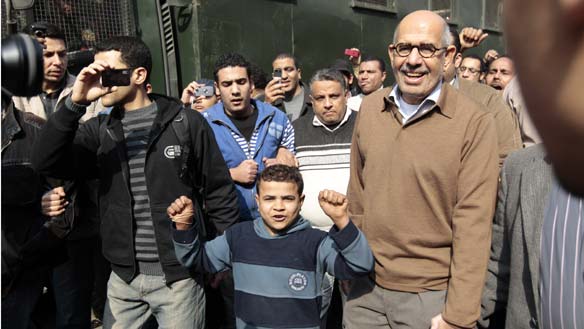
The most recent Nobel Laureate to make such a preposterous move is Egypt’s Mohammed El Baradei. He’s a former Director General of the International Atomic Energy Agency. He was awarded the Nobel Peace Prize for his “attempt” at purging the world of nuclear weapons.

El Baradei was heavily involved in the recent Egyptian revolution and was considered a symbol of resistance by many Egyptians. In February 2010 he formed the National Association for Change, a non-party-political movement. He later announced in March of 2011 that he intends to run in the upcoming presidential elections.

The outrageous part in all this buffoonery is not the silly reasons on which the Nobel Peace Prize was awarded to Annan and El Baradei, but the inconceivable conviction of the Nobel Laureates’ political aptitude.

Being in charge of a major global organisation, and having a high proficiency in telling stories doesn’t give anyone the right to a political career in their country, let alone be president. Politics, despite being a reprehensible field, like all other fields requires experience. And unlike other fields, its climate varies from one country to the next. So it only makes sense that successful politicians always have significant experience in their own country’s political atmosphere before making attempts at high positions.

Suddenly emerging on to a political scene and having the audacity to think that people should vote for you and your policies is not only stupid but quite disrespectful. The only thing people like Annan, Soyinka and El Baradei have to offer the populace is their much coveted accolade. This does nothing for anyone.

Anyone can think that they know how a certain country should be run; almost everyone in this world has political views and ideas; but not all can execute them, this is primarily due to a lack of political adroitness and familiarity with the people.

I think there’s a very important question that should be asked of every presidential candidate anywhere in the world. Referencing will be quite embarrassing but, as Janet Jackson so fruitfully put it, “What have you done for me lately?”

This question is more important than most people think, because you can always tell me what you’re going to do when you get elected, but what have you already done that makes you think that you’re a viable head of state. Written a book? No thank you. Inspected some nuclear plants? No thank you. Chose to intervene in some conflicts while ignoring others for political reasons? I think I’d rather vote for the first two.

So unless these laureates don’t think much of the people they’re campaigning to govern, the thought of running for office shouldn’t even cross their minds.

Powered By Blogger